
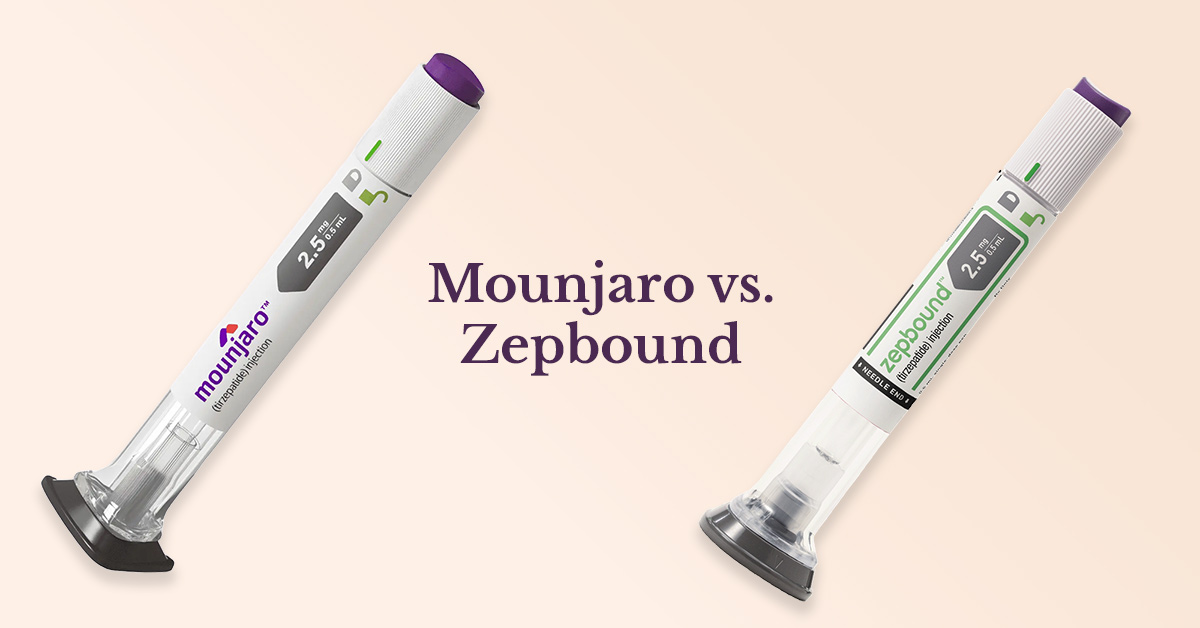
Zepbound vs Mounjaro
- Zepbound vs Mounjaro both contain tirzepatide but treat different conditions. Mounjaro is FDA-approved for type 2 diabetes, while Zepbound is approved for obesity, weight-related conditions, and obstructive sleep apnea in adults.
- Tirzepatide mimics gut hormones to regulate blood sugar and appetite. It improves insulin sensitivity, slows digestion, lowers glucose after meals, and reduces hunger, leading to effective diabetes control and significant weight loss.
- Both drugs share dosing, side effects, and risks, but coverage varies. The choice between Mounjaro and Zepbound depends on your health needs, insurance plan, and long-term goals.
Mounjaro and Zepbound are two brand-name medications that contain the same active ingredient, tirzepatide. While they work the same way in the body, the key difference lies in what they’re approved to treat. Mounjaro is approved by the Food and Drug Administration (FDA) to treat type 2 diabetes, while Zepbound is approved for obesity, weight-related health conditions, and obstructive sleep apnea in certain adults.
This guide compares the two drugs in terms of uses, effectiveness for weight loss, side effects, dosing, and cost so you can better understand which option might be right for you.
Key Differences Between Mounjaro and Zepbound
Tirzepatide, the active ingredient in Zepbound and Mounjaro, is classified as a dual glucose-dependent insulinotropic polypeptide (GIP) and glucagon-like peptide-1 (GLP-1) receptor agonist. This means it mimics two hormones, GIP and GLP-1, to help regulate blood sugar levels and appetite in adults with type 2 diabetes.
In addition, they promote feelings of fullness, reduce appetite, and lower calorie intake, ultimately leading to weight loss.
By encouraging weight loss, tirzepatide can also help improve obstructive sleep apnea, as shedding excess weight reduces pressure on the airway during sleep.
Here’s a side-by-side breakdown of how Mounjaro and Zepbound compare:
| Mounjaro | Zepbound | |
| Active Ingredient | Tirzepatide | Tirzepatide |
| FDA-Approved Use | Type 2 diabetes in adults | Obesity (BMI ≥30) or overweight (BMI ≥27 with a related condition); Obstructive sleep apnea in adults with obesity |
| How It Works | Dual GIP and GLP-1 receptor agonist that helps regulate blood sugar and appetite | Same as Mounjaro |
| Administration | Weekly subcutaneous injection (stomach, arm, thigh) | Same as Mounjaro |
| Available Strengths | 2.5 mg – 15 mg pens | 2.5 mg – 15 mg pens |
| Common Side Effects | Nausea, diarrhea, vomiting, constipation, stomach pain, indigestion, injection site reactions | Same as Mounjaro |
| List Price | ~$1,079/month | ~$1,086/month |
FDA-approved uses
Mounjaro received FDA approval in 2022 for adults with type 2 diabetes mellitus, to be used, along with diet and physical activity, to improve blood sugar control.
Zepbound received FDA approval in 2023 for chronic weight management in adults with:
- Obesity (having a body mass index or BMI of 30 or higher).
- Overweight (having a BMI of 27 or higher) with a weight-related health condition, such as high blood pressure, type 2 diabetes, high cholesterol, and heart disease.
- In 2024, Zepbound received additional FDA approval for the treatment of moderate-to-severe obstructive sleep apnea (OSA) in adults with obesity.
Note: Because Zepbound and Mounjaro contain the same active ingredient, they are sometimes prescribed off-label during drug shortages. For example, a healthcare provider may use clinical judgment to prescribe Mounjaro off-label for weight loss on a case-by-case basis.
How Much Weight Do You Lose on Zepbound or Mounjaro?
Mounjaro
A review of the SURPASS trials found that participants with type 2 diabetes mellitus who used Mounjaro experienced an average weight loss of approximately 5% to 14% of their initial body weight.
In the SURMOUNT-2 trial, individuals receiving the highest dose of Mounjaro (15 mg) lost, on average, about 14.7% of their body weight over 72 weeks.
Zepbound
The SURMOUNT-1 trial assessed weight loss in adults with obesity (without diabetes) over 72 weeks.
At 5 mg, the average weight loss was approximately 15.0%, at 10 mg it was about 19.5%, and at 15 mg it reached around 20.9%.
Participants in the placebo group lost approximately 3.1%.
Notably, both Zepbound and Mounjaro should be combined with consistent lifestyle changes with a reduced-calorie diet and increased physical activity.
Side Effects & Risks
Mounjaro and Zepbound cause similar side effects and carry the same risks.
Common Side Effects
The most common side effects of Zepbound and Mounjaro are nausea, diarrhea, vomiting, constipation, abdominal pain, indigestion, and injection site reactions.
Serious Risks
Before using tirzepatide (Mounjaro, Zepbound), discuss with your doctor if you have:
- Severe stomach problems such as gastroparesis (issues with emptying of your stomach)
- Acute kidney injury or kidney disease
- Acute gallbladder disease
- Acute pancreatitis
- Serious hypersensitivity reactions
- Hypoglycemia (low blood sugar), especially when used with other diabetes treatments.
- Diabetic retinopathy
- Suicidal behavior and ideation
- Surgery in the near future that uses deep sedation (general anesthesia)
You should not use this medication if you have:
- A personal or family history of thyroid cancer or a condition called Multiple Endocrine Neoplasia syndrome type 2 (MEN 2).
- Risk of thyroid cancer was associated with tirzepatide in studies with rats. However, it is unknown if tirzepatide will cause thyroid tumors or medullary thyroid carcinoma (MTC, a type of thyroid cancer) in humans.
- Let your doctor know immediately if you notice hoarseness, lump or swelling in your neck, shortness of breath, or difficulty swallowing.
- Allergy to tirzepatide or other ingredients in this medication
Cost Comparison
The list price is the price you will pay out of pocket for a month’s supply of Mounjaro or Zepbound if you do not have health insurance, your insurance does not cover the medication, and you are not eligible for manufacturer discounts. They are as follows:
- Mounjaro: $1,079.77 per fill
- Zepbound: $1,086.37 per fill
Savings Programs
Commercially insured patients who have insurance coverage for Mounjaro or Zepbound may pay as little as $25 for a 1-month or 3-month prescription by using a savings card. A one-month supply (28 days) includes four pens, while a three-month supply (84 days) includes twelve pens.
To benefit from this program, you must be prescribed either Mounjaro or Zepbound for an FDA-approved use. You must be at least 18 years old, a legal resident of the U.S., and not participating in any state, federal, or government-funded healthcare program.
Which Medication Is Right for You?
It’s essential to consult a healthcare professional before taking Zepbound or Mounjaro to ensure you are suitable for either medication.
While both can be very effective and have similar side effect profiles, factors to consider when choosing between them may include the condition being treated, your insurance coverage, and your long-term health goals.
Your doctor will prescribe either Mounjaro if you have type 2 diabetes and need to lose weight.
However, your healthcare provider may prescribe Zepbound if you do not have diabetes and are looking for a weight loss medication.
Frequently Asked Questions About Mounjaro vs. Zepbound
Is Zepbound Stronger Than Mounjaro?
No, their strengths and effectiveness are comparable. However, they are used for different conditions.
Can You Switch From Mounjaro To Zepbound?
Yes, it is possible to switch from Mounjaro to Zepbound and vice versa if your health goal shifts from managing diabetes to focusing on weight loss.
Does Insurance Cover Zepbound or Mounjaro?
Coverage for Zepbound and Mounjaro varies from plan to plan. Many plans cover Mounjaro for type 2 diabetes, and coverage for weight loss medications like Zepbound depends on the insurance plan.
Are The Side Effects of Zepbound and Mounjaro The Same?
Yes, both Zepbound and Mounjaro can cause digestive side effects, including nausea, diarrhea, vomiting, and stomach pain. However, your body will usually adjust to the medication over time.
Does Zepbound or Mounjaro Have A Generic?
No, Zepbound and Mounjaro are brand names only, and no lower-cost generic is currently available. Zepbound vs Mounjaro.